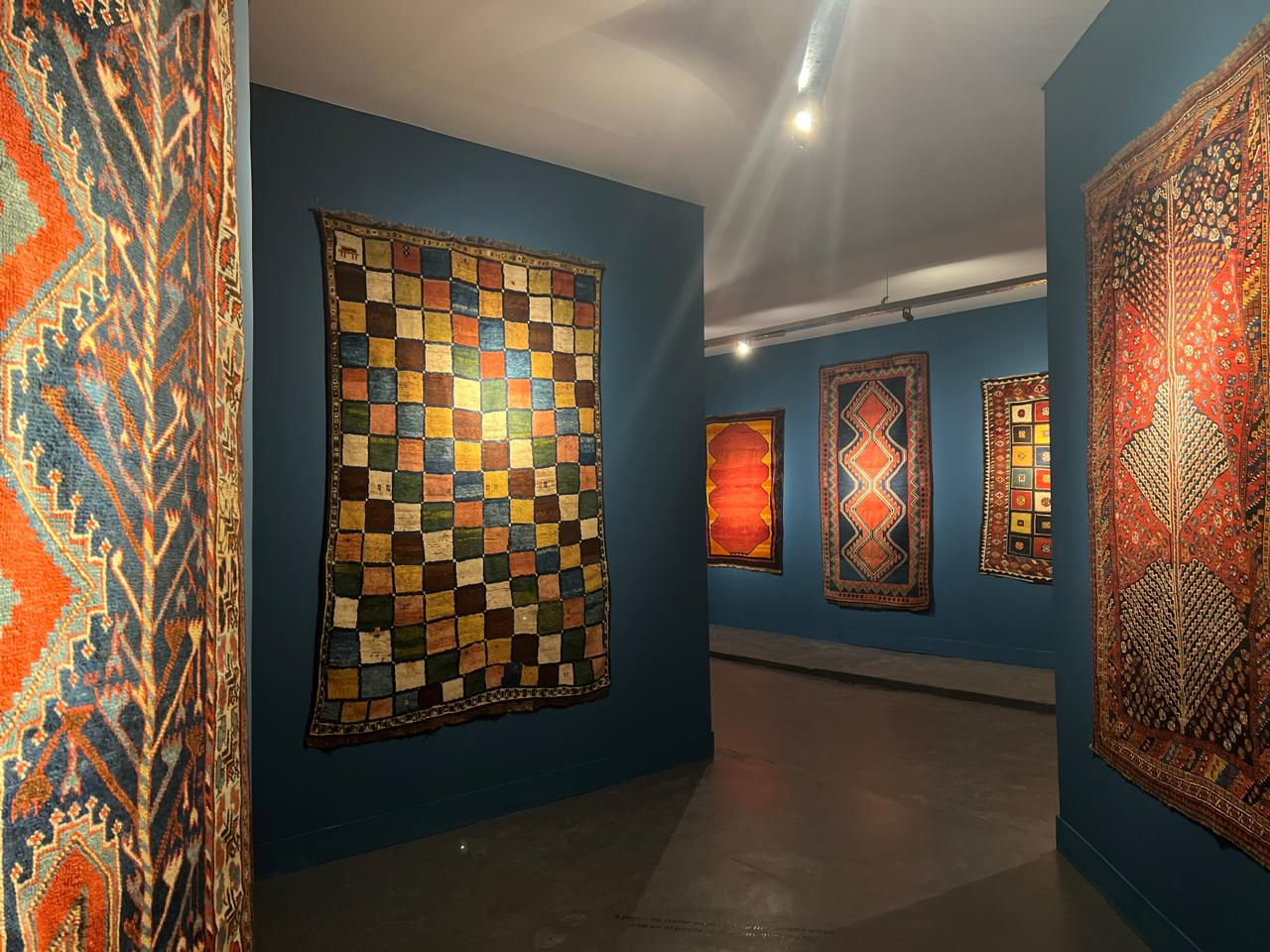
El Hilo de Ariadna
Ancient Middle Eastern tapestries and textiles
A textile experience in a winery dating back to 1890
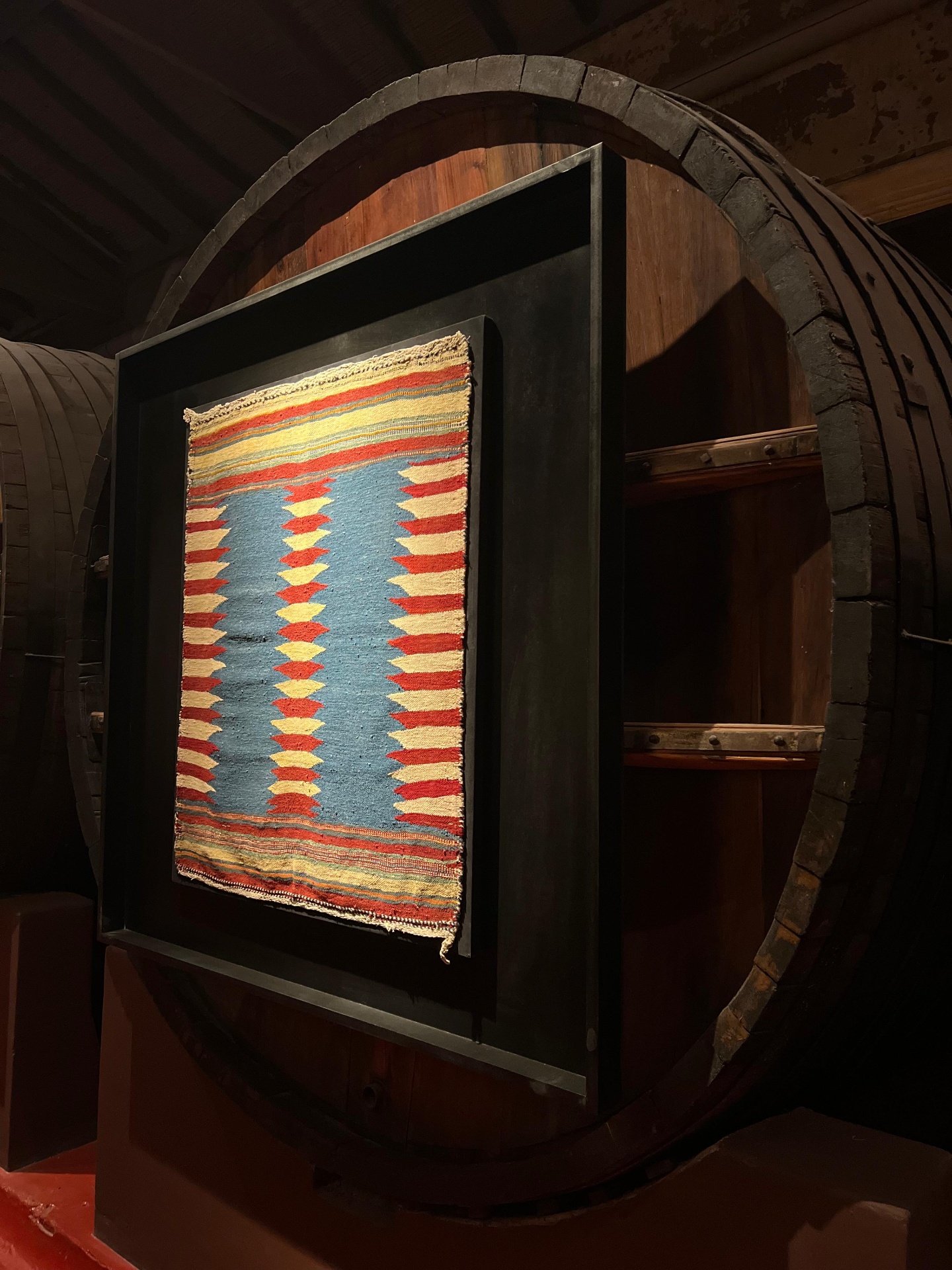
A unique exhibition of antiques and textiles made in the Middle East under the creative design of European artists.
El Hilo de Ariadna
Discover the fascinating world of ancient Middle Eastern tapestries and textiles, each piece telling a story of centuries-old craftsmanship and cultural heritage.
Below, we explore two threads: the meaning behind the name El Hilo de Ariadna, and the place woven textiles hold in Middle Eastern life.
Open every day during regular business hours. Free to visit.
Book on WhatsApp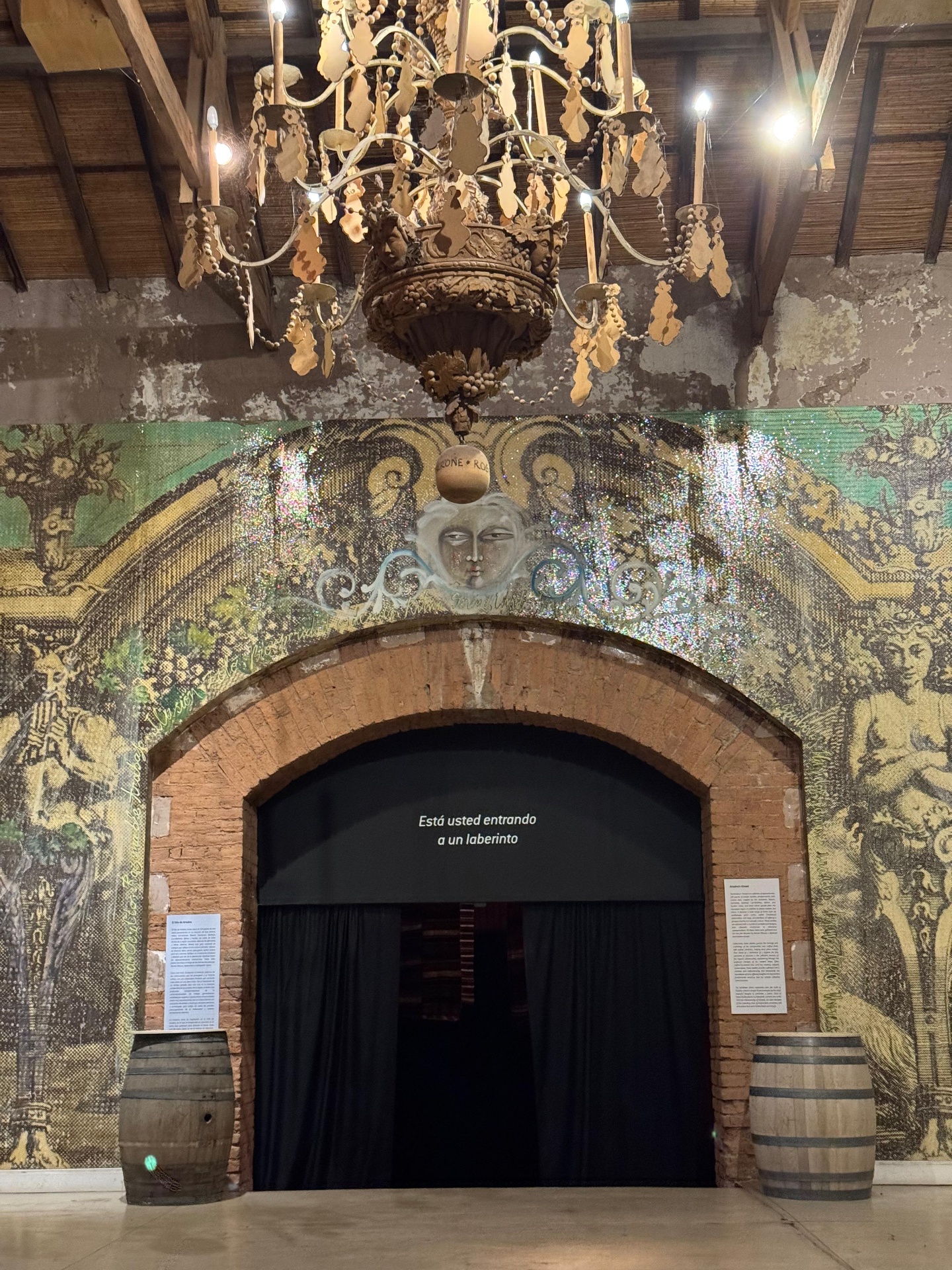
Why the name
El Hilo de Ariadna
In Greek myth, King Minos of Crete kept the Minotaur, half man and half bull, at the heart of a labyrinth built by the architect Daedalus. The maze was so intricate that no one who entered could find the way out. Every few years Athens was forced to send young men and women into it as tribute to the creature.
When the hero Theseus volunteered to go, Minos's daughter Ariadne gave him a simple gift: a ball of thread. He tied one end at the entrance and unwound it as he walked deeper into the darkness. After facing the Minotaur, he followed the thread back to the light.
“Ariadne's thread has since become a metaphor for whatever allows us to find our way through complexity: a guiding line, a clue, a story that holds together.”
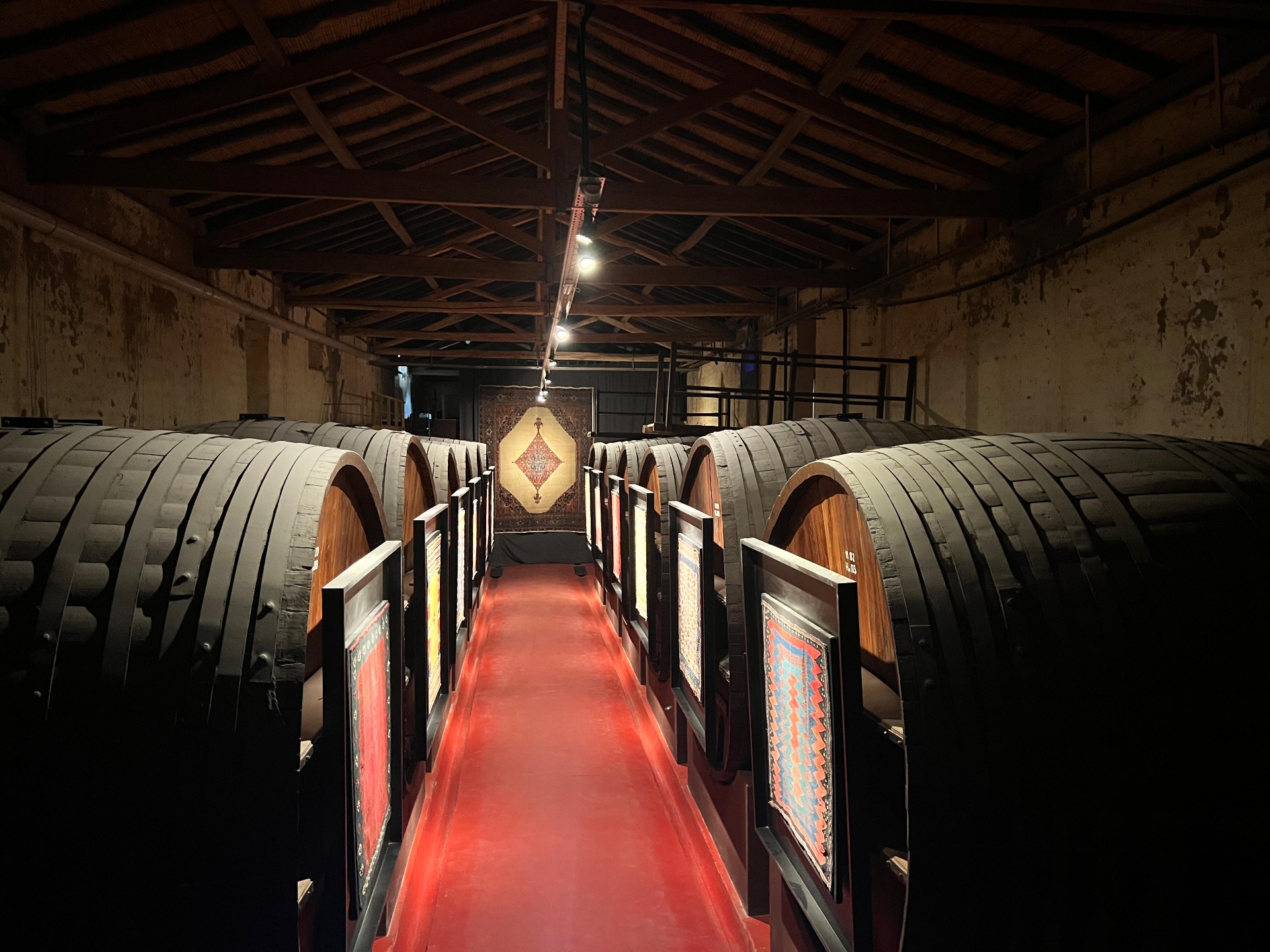
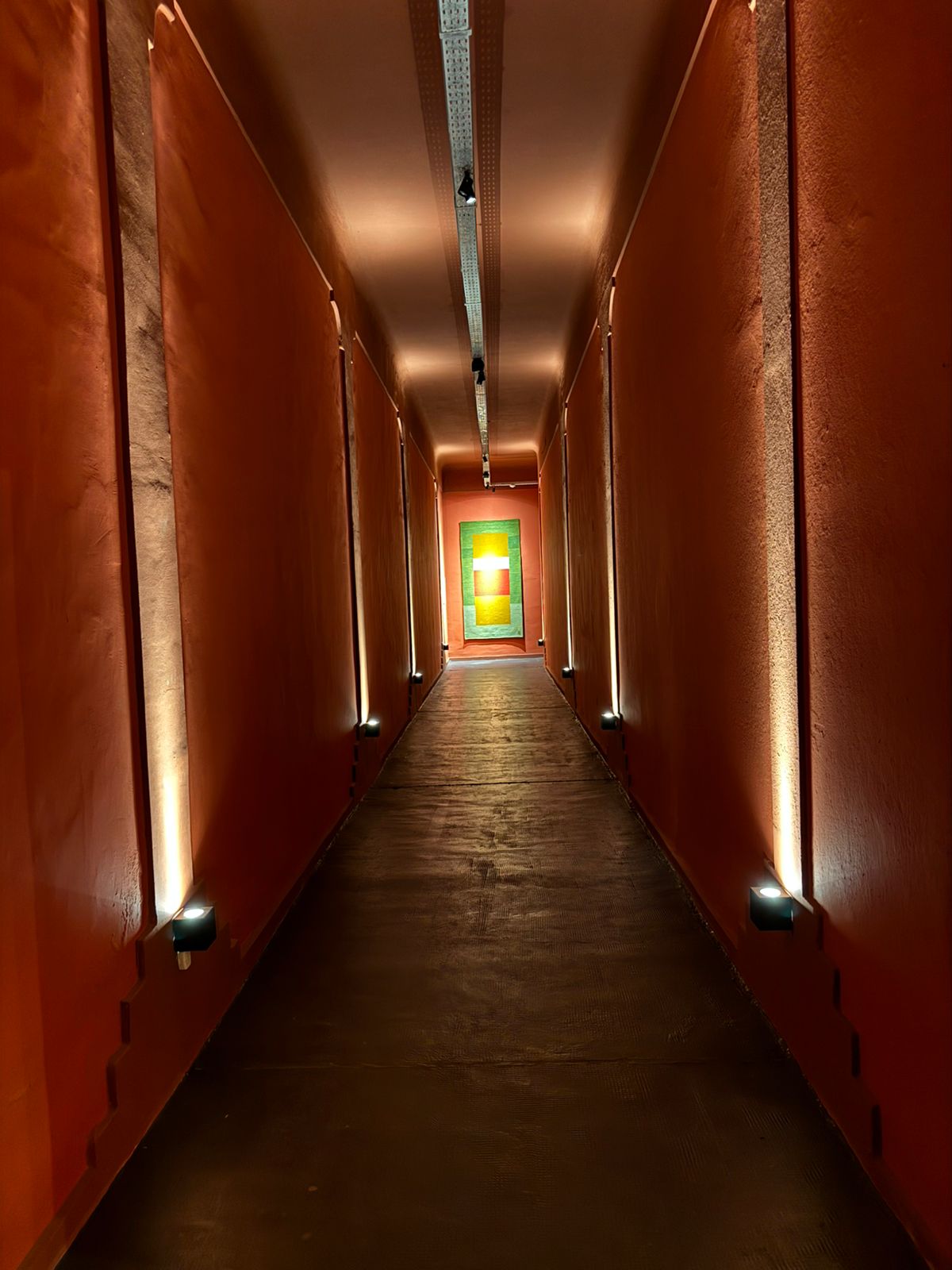
It seems fitting that the thread that saved Theseus belongs to the same craft we celebrate here. Spinning, weaving and the patient work of the loom are, at heart, the art of leading a single line through a maze until it becomes a pattern.
Borges and the labyrinth
No writer returned to the labyrinth more often than Jorge Luis Borges. For him it was the perfect image of the universe: infinite, ordered and bewildering all at once. Labyrinths appear throughout his work, as libraries without end, as gardens of forking paths, as deserts and as cities, and the motif became so central that his stories were first published in English under the title Labyrinths.
In “La casa de Asterión,” Borges retells the myth from inside the maze, through the eyes of the Minotaur himself. Asterión is not a monster but a solitary, almost innocent being. He wanders endless corridors and waits for someone to come and free him. Only in the final lines do we realise who is speaking, and that Theseus is the long-awaited visitor. Late in life, Borges returned to Ariadne directly, reflecting that her thread has been lost, and that we must each find our way through the labyrinth as best we can.
The labyrinth has also found a home in Mendoza: in San Rafael, a hedge maze was planted in homage to Borges, a living tribute to the writer who taught us to see labyrinths everywhere.
Follow the thread
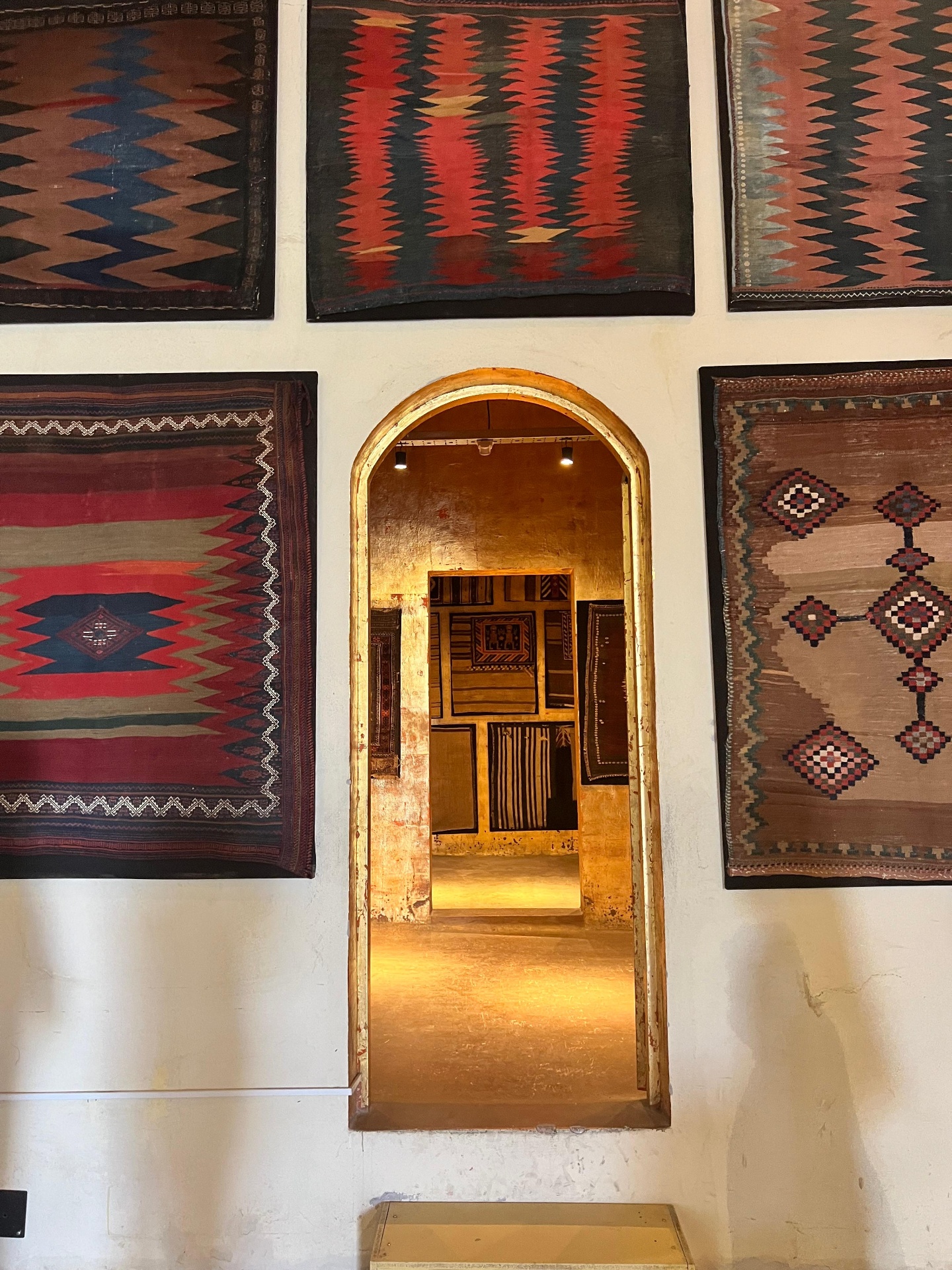
Every labyrinth has two ends: the entrance where the thread begins, and the centre where something waits. Here they face each other. Across from this space lies the gallery of the Minotaur, where the story continues from the other side of the maze.
Visit Galería del Minotauro →II
More than a floor covering
Among the pastoral and nomadic peoples of Anatolia, Iran, the Caucasus and Central Asia, a “rug” was historically far more than something placed on the floor. It was part furniture, part luggage, part dowry and part visual language.
For a household always on the move, woven textiles made enormous practical sense. Wool came from the flocks that travelled with the family; it could be spun and dyed along the way and woven on simple portable looms. The finished piece might become a floor, a blanket, a mattress, a tent divider, a saddle cloth, a storage chest or a carrying bag. When the camp moved, much of the household could be folded, rolled up, filled with belongings and loaded onto animals. Some bags were made specifically to carry bedding, flour, salt, or the wooden spindles used to spin the very wool they were woven from.
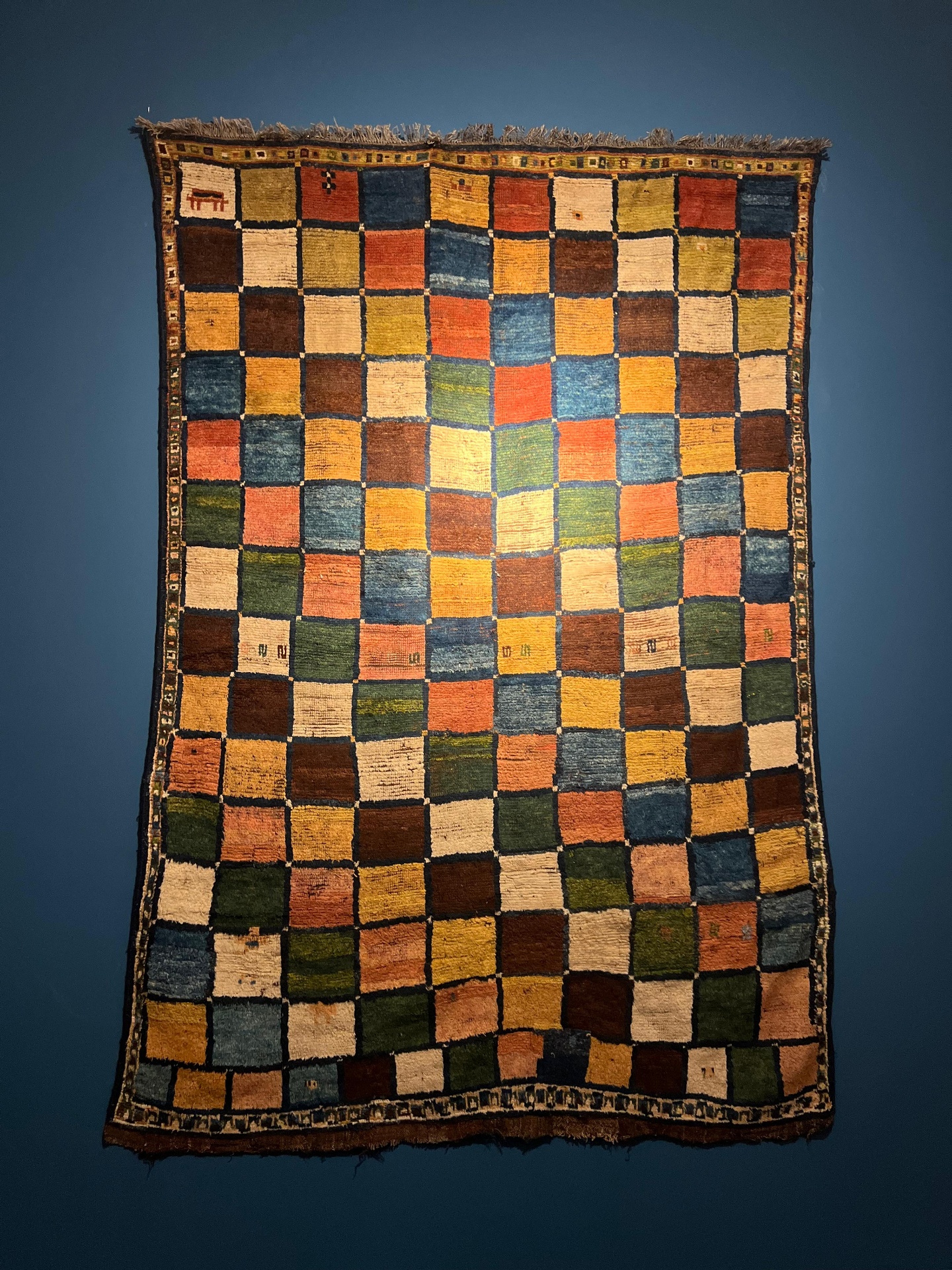
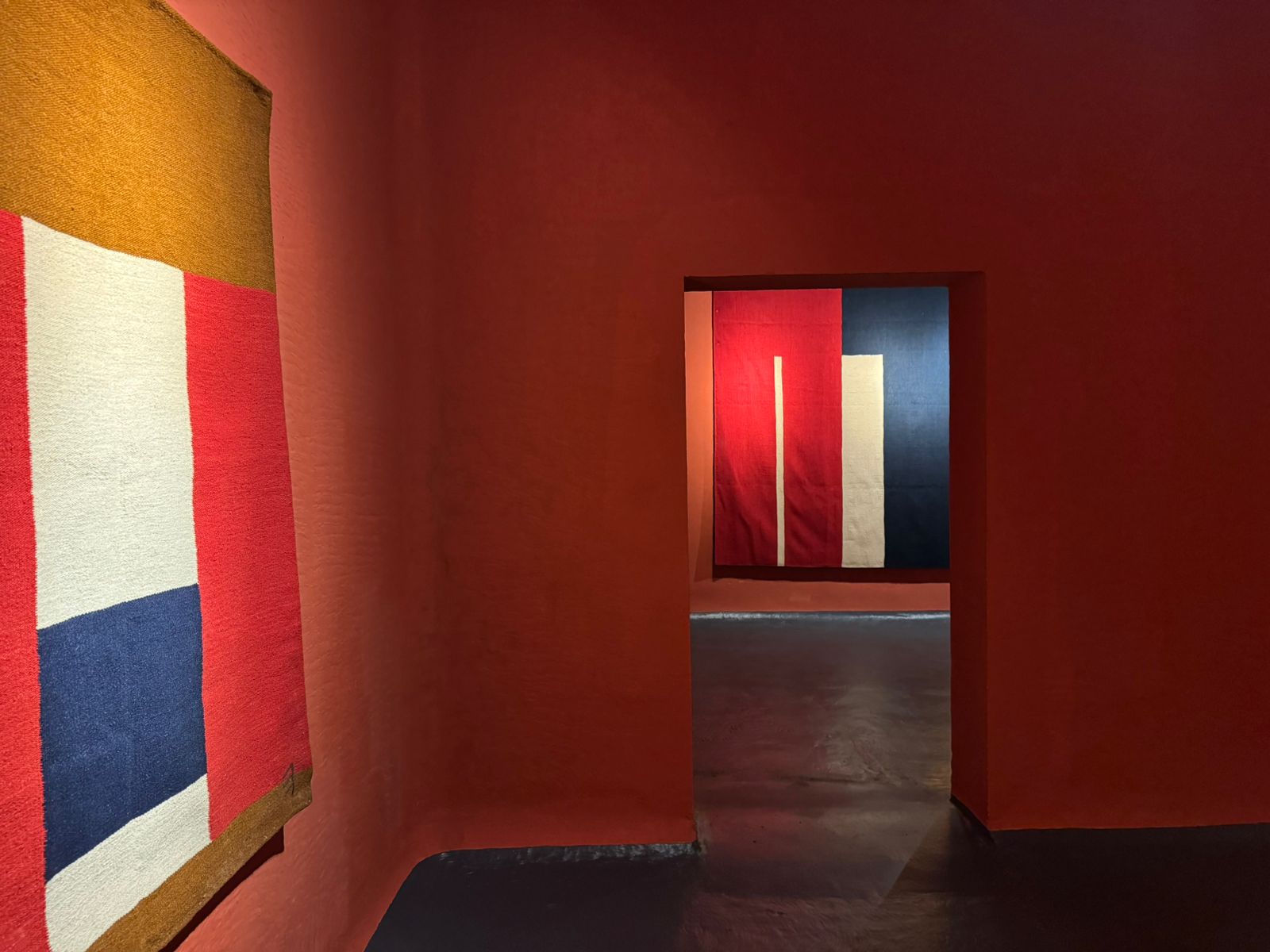
That practicality helps explain why weaving became so culturally important. The work was traditionally done by women, who spun the wool, dyed the yarn and wove the textiles, often on small looms that could travel with the camp. Their designs were rarely “pictures” in the Western sense, but combinations of geometric forms, animals, plants, protective symbols and inherited motifs. A vocabulary of shapes and colours could identify a community or weaving tradition, and within it each weaver had room to improvise. Every piece was at once an expression of collective identity and of individual artistry.
So when we say that rugs “tell stories,” we do not mean a written narrative. A weaver might include a bird, a ram's horn, a tree, a flower or a human figure because it belonged to a familiar repertoire, because it held personal meaning, or simply because she liked the composition. Many of these motifs are thought to be centuries-old emblems whose meaning we can no longer fully read. Even so, a textile could preserve something of a family, a marriage, a migration or a landscape without containing a single word. Some pieces had explicitly ceremonial roles: among the Turkmen, woven asmalyk panels adorned the sides of the bridal camel and were later hung inside the tent as keepsakes of the wedding, much as we keep wedding photographs.
One word, many objects
Pile carpet
Knotted wool rising from the foundation to form a soft surface. Warm and insulating, used for sitting, sleeping, prayer and prestige.
Gabbeh
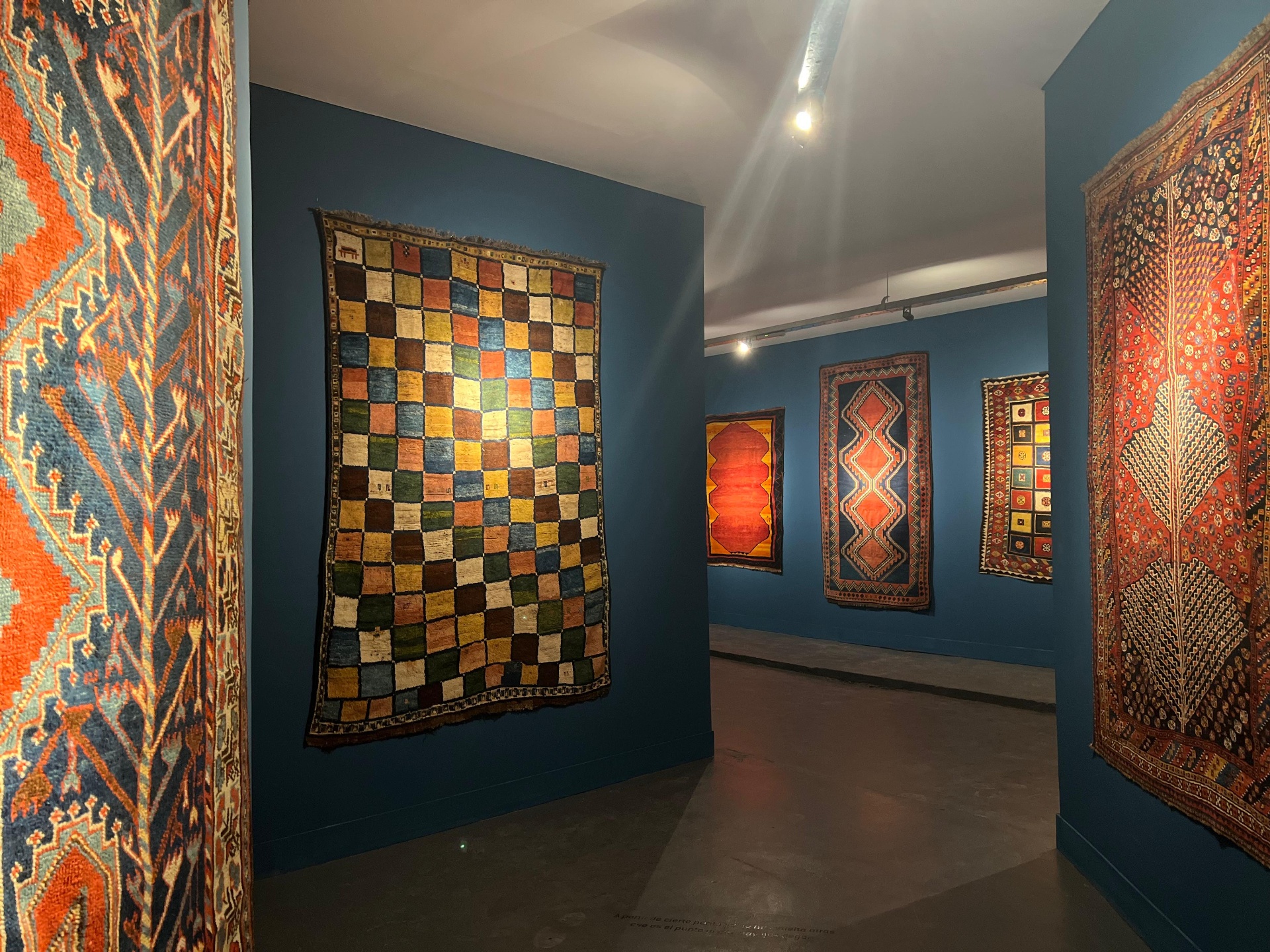
A coarse, loosely knotted pile rug from the tribes of Iran's Zagros mountains, with long, thick pile and simple fields of colour. Traditionally a personal rug, often a woman's, used as a sleeping blanket and even as a wrap in which she carried her household goods from camp to camp.
Kilim
Flat woven, with no pile. Thinner, lighter and often reversible, with bold geometric designs born of the technique itself. Used for floors, covers, partitions and wrapping belongings.
Jajim and cicim
Lightweight flat weaves. Jajim is typically woven in narrow strips and sewn together; cicim is decorated with extra brocaded threads. Used as blankets, covers and bedding wraps.
Soumak
A flat weave made by wrapping extra threads around the warps, producing a dense, richly patterned face. Often used for bags and saddlebags.
Khorjin (heybe in Turkish)
A double saddlebag, the nomad's backpack, briefcase and purse, slung across a horse, donkey or camel.
Mafrash
A large, box-shaped woven bag for bedding and clothing, effectively the nomadic household's chest or suitcase.
Prayer rug
Pile or flat woven, usually with a niche design pointing in the direction of prayer. A clean, portable place to pray.
Tent textiles
Long woven bands that bound and decorated the tent, and among the Turkmen the ensi, a richly knotted rug hung at the tent's entrance.
Woven into life
The differences in pile are revealing. A long-piled gabbeh is closer to a portable mattress than to the thin decorative carpet imagined today. A kilim sits at the opposite extreme: no pile, light, easy to fold and remarkably versatile. A dense, short-pile carpet trades some portability for durability, warmth and finer detail.
This is why the Western idea of the “Oriental rug” can mislead. In a settled European house, the rug became an object placed inside the architecture. In a nomadic camp, the textile was woven into daily life itself: it furnished the tent, framed its entrance, carried the household from one pasture to the next and marked its most important moments.
Complete your experience: El Hilo de Ariadna is located in the same venue as Galeria del Minotauro, our Club Tapiz restaurant, and our olive oil tastings. Complete your visit with any of these experiences.